Child Labor in Georgia's Agriculture: A Critical Examination

If you had to decide between your child’s education and your family’s survival, which would you choose? For millions of families worldwide, this is not a hypothetical question but a harsh reality. In Georgia, a country with a rich agricultural history, child labor has long been a part of rural life. For many families, the economic necessity to survive often leads them to rely on the labor of their children, especially during harvest season. Many children in Georgia continue to work alongside their parents in fields and farms, missing out on critical opportunities for growth. The question of when, where, and under what conditions children should work is essential to solving this issue. Drawing on Chitra Banerjee Divakaruni’s essay, “Live Free and Starve,” it is imperative to argue that while financial necessity can compel families to rely on child labor, any such work must be strictly regulated to prevent exploitation. Child labor in Georgia's agriculture should not be allowed to persist, as it undermines children's safety, education, and future opportunities.

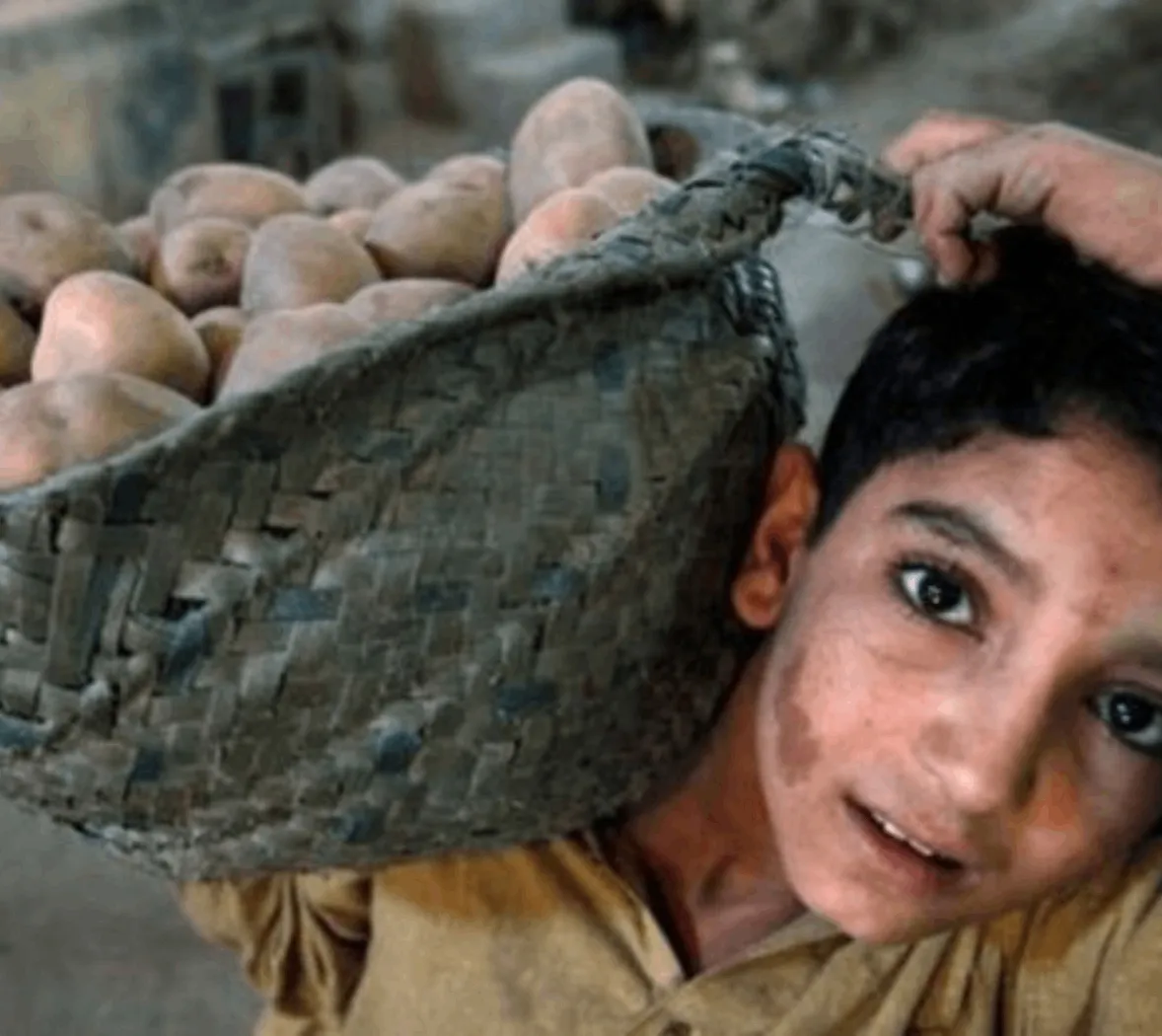
Georgia, the beautiful country nestled between Europe and Asia, with its breathtaking Caucasus mountains and Black Sea shores, has a rich history shaped by its time as part of the Soviet Union. Under Soviet rule, labor was valued above all else. People were expected to work for the state, contributing to collective farms, with children often following their parents into the fields. Even after the Soviet Union’s collapse and Georgia’s transition to a capitalist economy, the tradition of child labor remained entrenched, especially in rural areas. Families, struggling to make ends meet, continue to rely on their children’s labor during harvest season, sometimes pulling them out of school to help pick fruits or vegetables. For many, it is seen as a survival tactic, where hard work is not just expected, but necessary for the family’s well-being. As the National Statistics Office of Georgia reported in 2015, approximately 4.2% of children aged between 5 and 17 were involved in labor, amounting to 24,400 children. The Labor Code of Georgia sets the minimum age for employment at 16, aligning with international standards. Despite this legal framework, the economic pressures on rural families force children to work alongside their parents during peak agricultural seasons. This does not allow for much opportunity for an education.

It is true that child labor is a terrible reality, especially when children are forced into it against their will. However, Chitra Divakaruni, an Indian American author and activist known for addressing social justice issues, raises an important question in her essay “Live Free and Starve,” stating: "But where are the schools in which they are to be educated? Where is the money to buy them food and clothing and medication, so that they don't return home to become the extra weight that capsizes the already shaky raft of their family's finances?" (Divakaruni335). She argues that, without alternative support systems in place, these children may be forced into even worse conditions. This perspective suggests that simply eliminating child labor without implementing viable solutions, such as education and financial aid, may push children into more dangerous or desperate circumstances, and extreme poverty. Despite this point, child labor means a lack of educational development, and exposure to dangerous conditions, which could affect the child for the rest of his or her life, which is why Georgia must make a stand against it.

One of the most pressing concerns regarding child labor in Georgia’s agricultural sector is safety. The physical toll that working on farms can take on children is often devastating. Young children, often no older than 10 or 12, are found working in fields for hours, picking fruits or tending to crops. They may be exposed to dangerous machinery, harmful pesticides, and extreme weather conditions without proper training or protective equipment. The story of Nino, a 12-year-old girl from a small village in Georgia’s rural regions. Every summer, Nino joins her family in the fields, picking strawberries under the scorching sun for 12-hour shifts. Her family cannot afford to hire adult labor, so Nino works alongside her parents and older siblings. In an interview with Radio Tavisupleba, “Children Should Work to Make Their Dreams Come True, Not in the Fields," Nino’s mother expressed the harsh reality: "If we don't work together, we won't have enough to survive through the winter.” While Nino’s family is simply trying to make ends meet, the risks she faces are considerable. Like many children in rural Georgia, Nino lacks the physical strength and training to safely handle the agricultural tools and chemicals her family uses, making her vulnerable to injuries or long-term health problems. Research from the International Labour Organization (ILO), "Child Labor and Its Elimination" reinforces these concerns, stating that child labor in agriculture often exposes young workers to the "most hazardous forms of child labor," where they may face both immediate injury and long-term health risks. The unsafe working conditions that children, like Nino, endure must be addressed through stricter regulations that limit the types of work they can perform. If the government is serious about tackling child labor, they must prioritize child safety in agricultural settings, ensuring that hazardous tasks are off-limits to children. This will keep them safe while also helping to ensure they are healthy and alert enough for a good education.

A crucial aspect of child labor in Georgia is its detrimental effect on education. For many children in rural areas, work on family farms takes precedence over attending school. While they should be in the classroom, these children are instead learning how to pick fruit or work in the fields. This practice robs them of their chance to gain an education, perpetuating a cycle of poverty. For example, Giorgi, a 14-year-old boy from Georgia’s western region, has missed several months of school over the years to help his parents with the grape harvest. His mother, Khatuna, admits, “We don't want Giorgi to fall behind in his education, but we can’t afford to lose a day of work. He’s needed in the fields, and that’s more important right now” (UNICEF Georgia). Giorgi’s situation is not unique; in many rural families, the pressure to contribute to household income forces children to sacrifice their schooling. Research from UNICEF Georgia points to the direct link between child labor and reduced school attendance, explaining that when children miss school to work, they often struggle to catch up, leading to poor academic performance and an increased risk of dropping out (UNICEF Georgia). This loss of educational opportunities severely limits their future prospects. As Divakaruni writes in “Live Free and Starve,” “The children who are made to work are not made free, but enslaved by circumstances” (Divakaruni. 335). Education is a key to breaking the cycle of poverty, and when children like Giorgi are denied that opportunity, they face a grim future. The government must ensure that children who are forced to work due to economic necessity are still able to attend school. A combination of education reforms and social safety nets for low-income families could allow children to stay in school while still helping at home in non-hazardous ways, such as assisting with lighter tasks after school hours. This will provide children with more opportunities in their adult lives.

Future opportunities for children like Nino and Giorgi are severely limited by child labor. These children are missing out on critical experiences and skills that would prepare them for the workforce as adults. Without a proper education, vocational training, or the opportunity to develop personal skills, these children often end up in the same low-wage, labor-intensive jobs as their parents, perpetuating the cycle of poverty. Giorgi’s future, for instance, will likely involve farming, just as his parents did before him, unless he has the chance to break free through education. Unfortunately, without a strong educational foundation, his chances of escaping this pattern are slim. As the International Labour Organization (ILO), "Child Labor and Its Elimination" argues, investments in education are essential to breaking the cycle of poverty caused by child labor. Vocational training and education can provide children with the skills needed to pursue better-paying, more secure jobs, which in turn improves their long-term prospects. To protect children’s future, governments must not only regulate child labor but also invest in creating alternative pathways for children, such as after-school programs, scholarships, and vocational training. Georgia is a great country, but if it is ever to be a global power, a member of NATO and the EU, it needs an educated, professional population along with its hard-working laborers and it begins in childhood.

Child labor in Georgia’s agricultural sector is a deeply rooted issue that requires immediate attention and reform. While economic necessity drives many families to rely on their children’s labor, this practice cannot continue without strict regulations that protect children's safety, education, and future opportunities. Ensuring safe working conditions, providing access to education, and opening doors to better job prospects are essential to eliminating the harms of child labor. The government of Georgia must prioritize reforms that address these issues, ensuring that children are not forced into a life of labor but are free to pursue their education and develop the skills needed for a prosperous future.

Work Cited

"Child Labor and Its Elimination." International Labour Organization (ILO), https://www.ilo.org/. Accessed 1 March 2025.

Divakaruni, Chitra Banerjee. “Live Free and Starve.” The Brief Bedford Reader, edited by X. J.

Kennedy, Dorothy M. Kennedy, Jane E. Aaron, and Ellen Kuhl Repetto, Bedford/St.

Martin's, 2005, pp. 334–336.

“Georgia: Findings on the Worst Forms of Child Labor / Prepared for the U.S. Department of Labor.” U.S. Department of Labor, 2019, https://www.dol.gov/sites/dolgov/files/ILAB/child_labor_reports/tda2019/Georgia.pdf. Accessed 24 March 2025.

Kevanishvili, Eka. "Children Should Work to Make Their Dreams Come True, Not in the Fields." Radio Tavisupleba, Radio Tavisupleba, 12 June 2019, https://www.radiotavisupleba.ge/a/%E1%83%91%E1%83%90%E1%83%95%E1%83%A8%E1%83%95%E1%83%94%E1%83%91%E1%83%98-%E1%83%9B%E1%83%98%E1%83%9C%E1%83%93%E1%83%9D%E1%83%A0%E1%83%A8%E1%83%98-%E1%83%99%E1%83%98-%E1%83%90%E1%83%A0%E1%83%90-%E1%83%9D%E1%83%AA%E1%83%9C%E1%83%94%E1%83%91%E1%83%94%E1%83%91%E1%83%98%E1%83%A1-%E1%83%90%E1%83%A1%E1%83%90%E1%83%AE%E1%83%93%E1%83%94%E1%83%9C%E1%83%90%E1%83%93-%E1%83%A3%E1%83%9C%E1%83%93%E1%83%90-%E1%83%9B%E1%83%A3%E1%83%A8%E1%83%90%....

Accessed 1 March 2025.

Khaliani, Tatia. "Childhood in Labor." Civil Society Foundation (CSF), Civil Society Foundation, 21 November 2016, https://csf.ge/bavshvoba-shromashi/.

Accessed 4 March 2025.

National Statistics Office of Georgia. "Child Labor in Georgia." National Statistics Office of Georgia. 2015, https://www.geostat.ge/.

Accessed 1 March 2025.

UNICEF. PDO Report on Child Labour. UNICEF Georgia, 2020, https://www.unicef.org/georgia/media/6011/file/PDO%20report-Child%20Labour.pdf. Accessed 4 March 2025.

GET IN TOUCH WITH US

Social Icons