
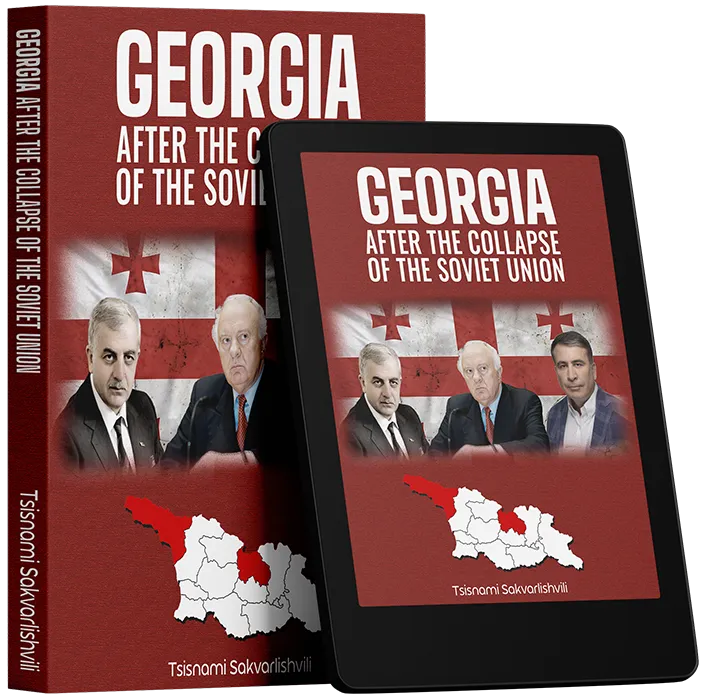
GEORGIA
AFTER THE COLLAPSE OF THE SOVIET UNION
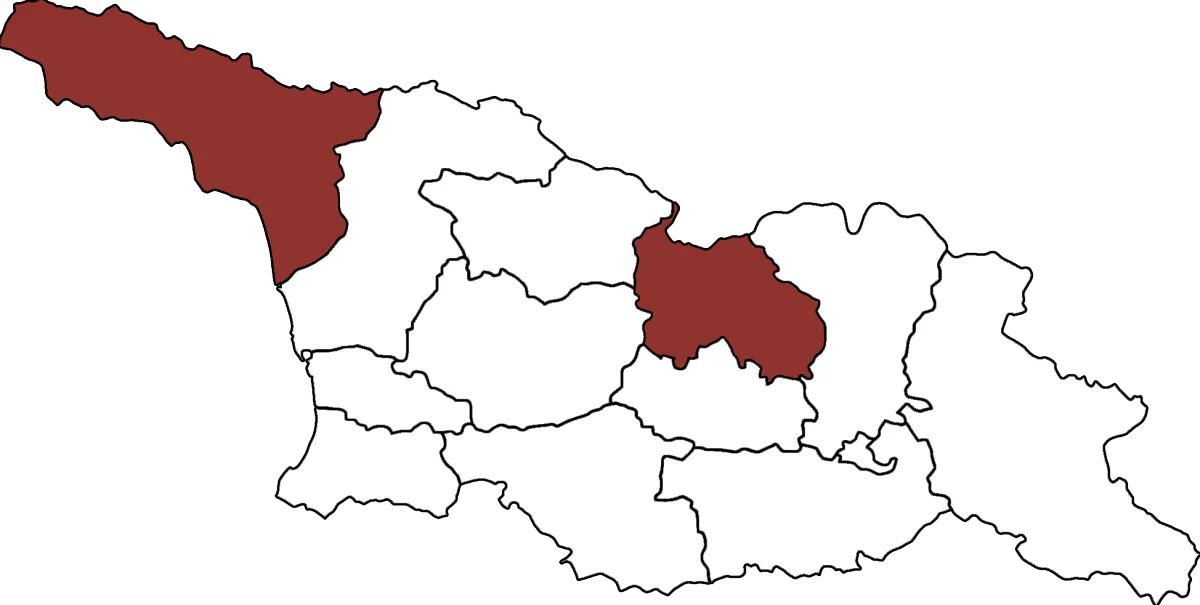
Georgia became independent in 1991 after the collapse of the Soviet Union, but the transition was marked by political instability, economic hardship, and conflicts in Abkhazia and South Ossetia.
Despite these challenges, reforms after the 2003 Rose Revolution helped strengthen institutions and move the country toward democratic development and Western integration.
A LAND DEFINED BY LOCATION
Georgia’s history and political destiny have always been shaped by geography. Located between the Black Sea and the Caspian Sea, the country sits at the crossroads of Europe and Asia. It shares borders with Russia to the north, Azerbaijan to the east, Armenia and Turkey to the south, and the Black Sea to the west.
This strategic position has made Georgia a natural bridge between continents, cultures, and trade routes. Throughout history, merchants, armies, and empires have passed through the Caucasus corridor. While this location brought economic opportunities, it also made Georgia vulnerable to foreign influence and geopolitical competition.
As a result, Georgia’s identity has been shaped not only by its culture and language but also by centuries of navigating powerful neighbors and competing global interests.
A GEOPOLITICAL FLASHPOINT THROUGH THE AGES
Georgia’s strategic location between Russia, Turkey, and the Middle East has long made it a geopolitical hotspot. After independence in 1991, conflicts in Abkhazia and South Ossetia fueled ongoing tensions. Today, Georgia continues to balance between Russian influence and Western integration within the broader South Caucasus power struggle.
THE HISTORICAL CHESSBOARD
Georgia has long sat at a strategic crossroads between Europe, the Middle East, and Central Asia, making it a target for powerful empires. Persia, the Ottoman Empire, and later Russia all sought influence over the region. By the early nineteenth century, Georgia was incorporated into the Russian Empire, a relationship that continued through the Soviet era. This long history of external control and geopolitical pressure continues to shape Georgia’s political identity and its efforts to balance independence with regional power dynamics.
ancient kingdoms
Long before modern borders, Georgia was home to ancient kingdoms such as Colchis, known from the Greek myth of the Golden Fleece. These early states shaped regional trade, culture, and religion, including Georgia’s early adoption of Christianity in the fourth century.
soviet era & independence
Georgia was incorporated into the Soviet Union in 1921 after the Red Army ended its brief independence. Despite Soviet control, Georgian national identity endured. The April 9, 1989 crackdown on protesters in Tbilisi strengthened the independence movement, leading to Georgia’s restored independence on April 9, 1991.
contemporary challenges
Since gaining independence, Georgia has worked to rebuild its economy, strengthen democratic institutions, and integrate with international organizations. Despite progress, the country still faces challenges such as political polarization, unresolved territorial conflicts, and geopolitical pressure from Russia.

Georgia is small on the map, but its fight for freedom carries a lesson for the world.
— Tsisnami 'Sissy' sakvarlishvili