After Davluri, the Founder and Artistic Director of Pesvebi, Vano Goderdzishvili performed a musical piece called “ Sachidao.” “Chidaoba,”which means wrestling. Wrestling is one of the oldest cultural traditions of Georgians, and there are many Georgian World Champion wrestlers. Composed by Revaz Lagidze, Vano performed this classical piece on the Georgian national musical instrument “Salamuri.”
The dance “Samaya” is traditionally performed by three women and represents King Tamar, Queen Nana and Saint Nino. Saint Nino brought Christianity to Georgia in the fourth century. During this period, the King of Georgia was King Mirian and his wife , Queen Nana and they established Orthodox Christianity as the state religion of Georgia.
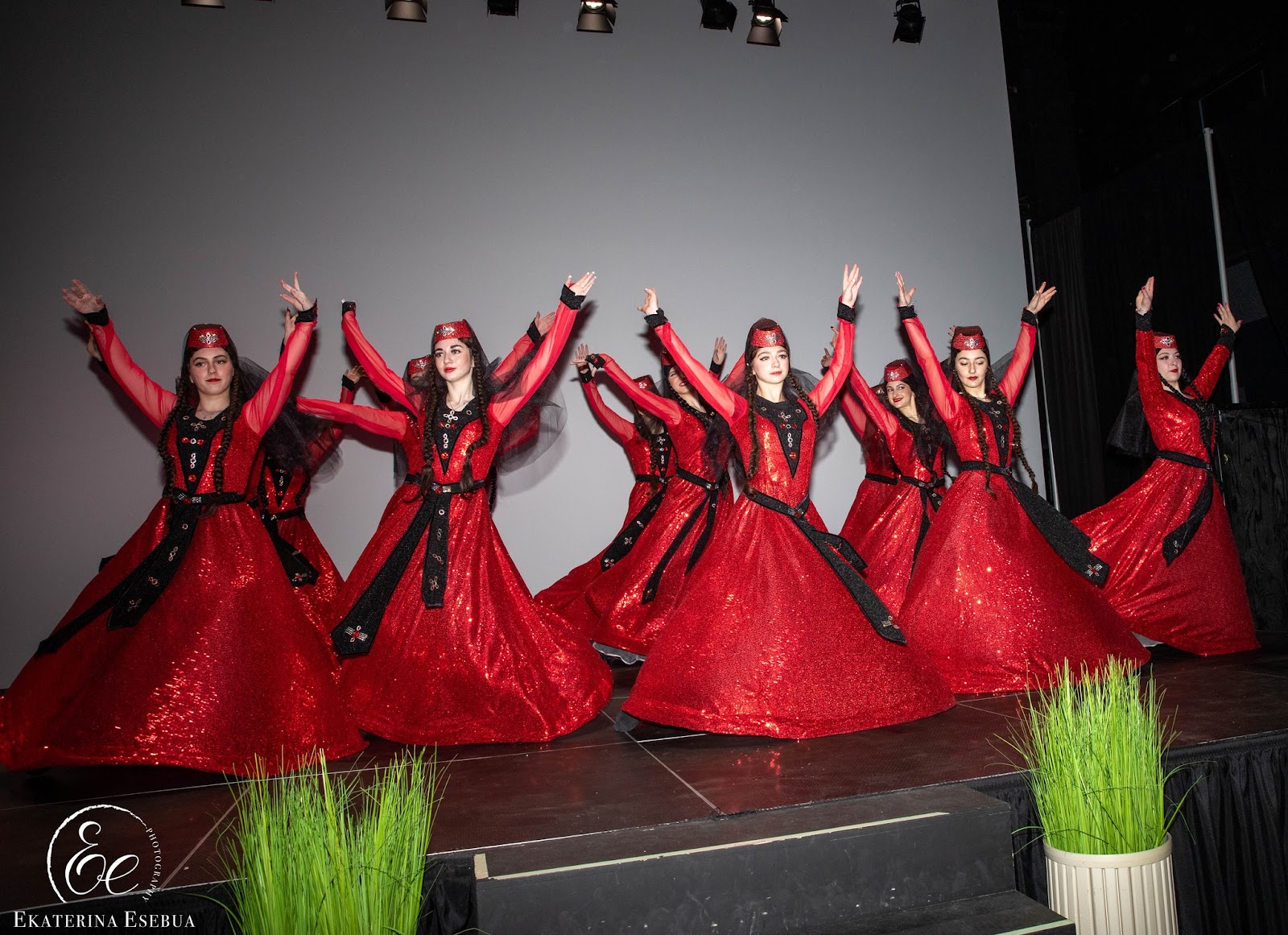
The next dance was Acharuli. Adjara is in the western region of Georgia, and its songs and dances are distinguished by a unique rhythm.
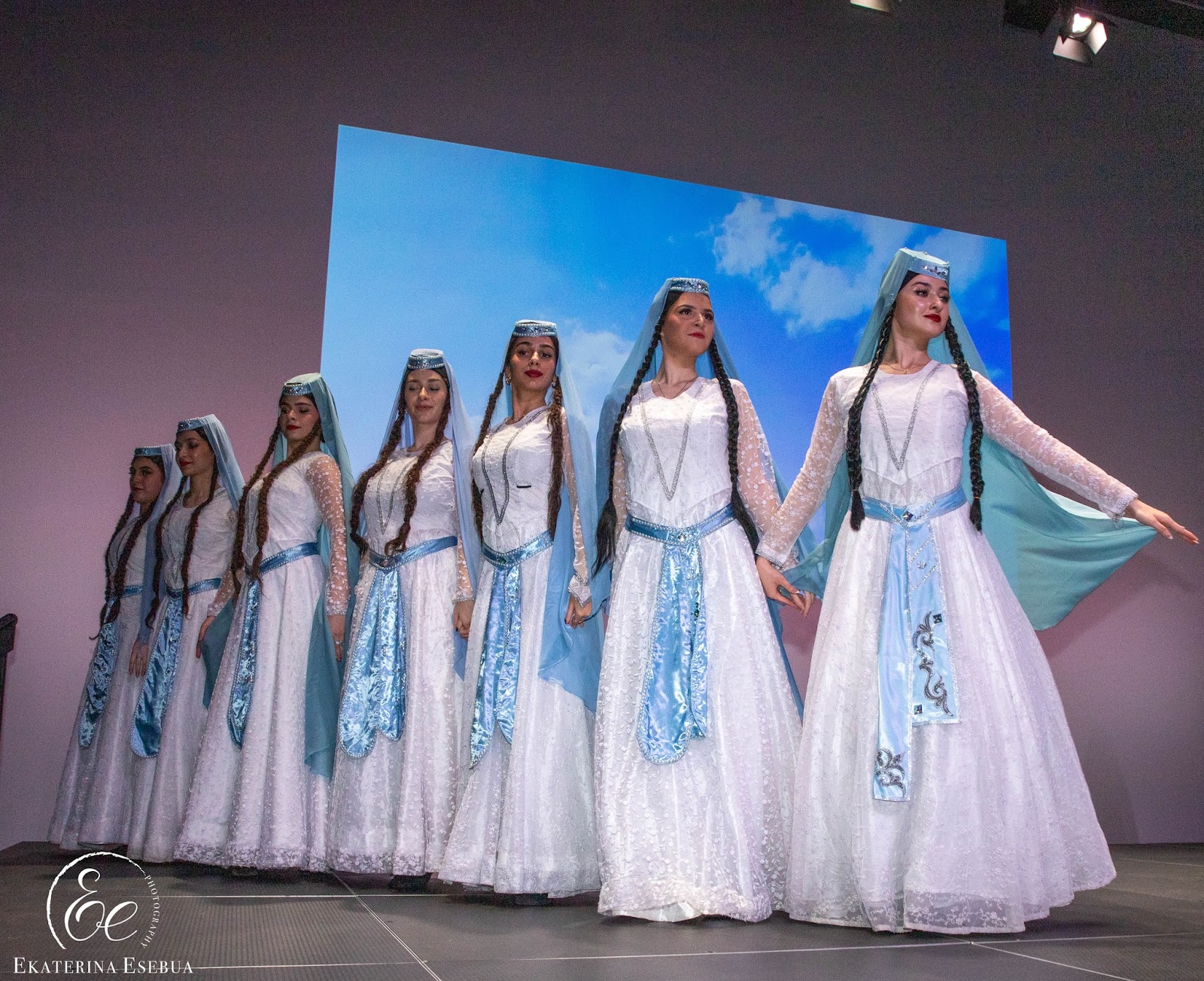
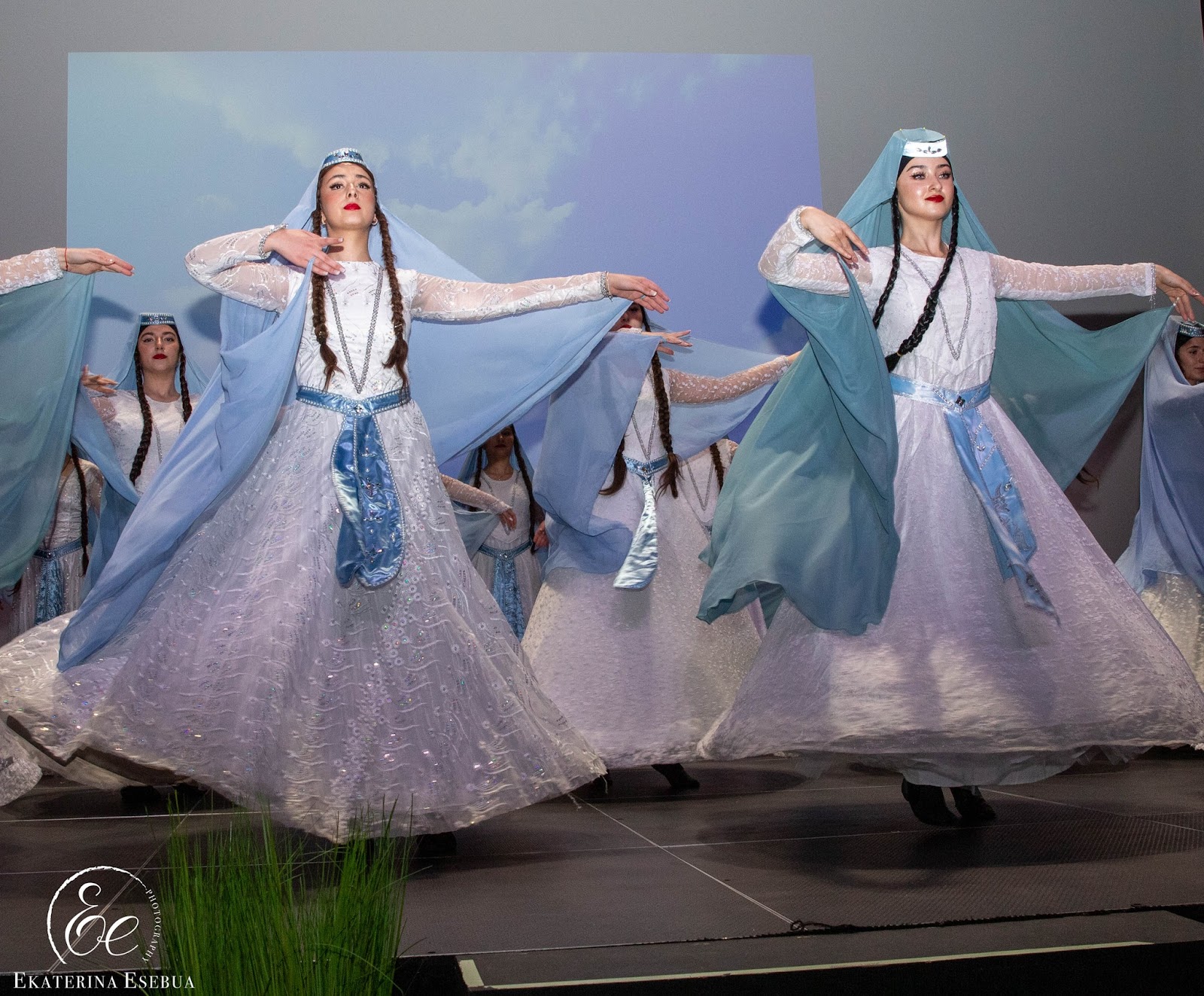
The dance Lamar expresses a woman’s tenderness, beauty and rich spirituality. The music of this dance must be calm and pleasant, as it is called the Dance of Angels.
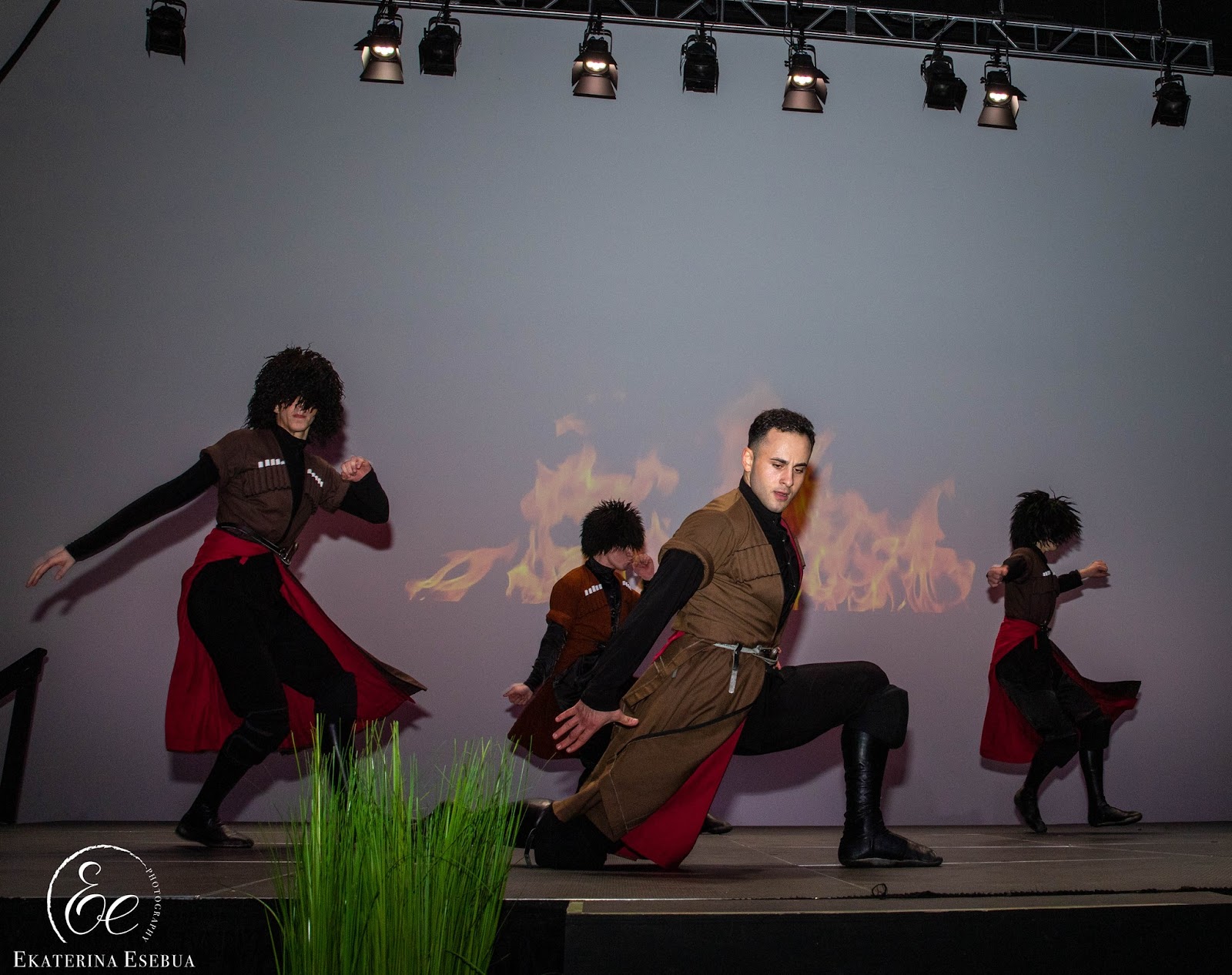
Kazbeguri represents Kazbegi in the Northern part of Georgia, adjacent to Russia. The people of this region have always been considered as border guards, because throughout Georgian history the borders of Georgia have always needed protection from Russian aggression. Even today, Russia occupies more than 20 percent of Georgia. And so the dance Kazbeguri reflects the harsh character and marshall spirit of this region. The suits for this dance have vertical stripes which refer to the symbolic protective bullets needed to protect Georgia, 90 percent of whose history is about wars. Combat elements became an integral part of the Georgian National dress.
Parikaoba is from Khevsureti, one of the high Mountain regions known for making special steel and weapons. This dance tells how much modesty and respect a Georgian man must have for a woman. If two men were fighting each other and they took out their weapons and one of them would surely die, if there was a woman nearby, they wouldn’t take out their weapons. If the fight had already started and the woman approached and threw down her scarf into the middle of the fighters, the men had to stop fighting right away. If the men continued to fight, it meant insulting the woman and they would be punished by society.
Mkhedruli is the dance of the horsemen, which includes Marshall elements.
Resident Ashly Milne -Tyte ( Filer ) said: “We really enjoyed it. Everyone was amazing! I’m still thinking about some of the dances. And you did a very good job as the host. We learned a lot.”
“Pesvebi’s” performance was something new and unforgettable for Americans and LTV will continue to bring international culture in the East End of Long Island.
Written by Tsisnami Sakvarlishvili
Photo Credit: Eka Esebua