Fred and Alexander disagreed about hiring me for their mother. Fred thought they needed a trained nurse, while Alexander was convinced, I was the perfect fit. Unfortunately, I accidentally got included in their heated text exchange about the matter. Reading their arguments was distressing, and I asked them to please exclude me. At that point, I thought, This is a crazy family, and maybe I shouldn’t work for them. Then I received a call from Alexander’s youngest daughter, Lulu. With her sweet voice, she begged me to work with her “Grandy” because she believed her grandmother needed someone just like me. During the interview, I had mentioned to Alexander that I had a son close to Lulu’s age, so he knew her voice would tug at my heartstrings.
I decided to give it a shot. Our next meeting was scheduled for August 8, 2017. That date was significant for me because every year on August 8, the Georgian community in New York protests Russia’s invasion and occupation of Georgia in front of the United Nations. I spent three hours at the rally before heading to meet Alexander and his mother for dinner. When Alexander mentioned a family dinner, I imagined something casual at their home on the Upper East Side. Instead, I found myself at Sel et Poivre, a five-star French restaurant on Lexington Avenue between 63rd and 64th Streets. Sadly, the restaurant no longer exists. It was Phyllis Rothschild Farley’s favorite spot for lunch and dinner, which is why they called it a “family dinner.”
The evening was magical. Alexander and I had duck, while Mrs. Rothschild Farley enjoyed her favorite bouillabaisse. We talked non-stop, switching between English and Italian. We had two glasses of Prosecco and shared crème brûlée for dessert. Mrs. Rothschild Farley was incredibly impressive, and I admired her deeply. We discovered so much in common: our love for history, politics, the Italian language, opera, and our shared connection to Capri Island. She visited Capri every summer to see her best friend Nicoletta Valletti, whose husband was the famous Italian tenor Cesare Valletti.
Alexander was thrilled to see his mother enjoying my company so much. After dinner, we walked from the restaurant to 580 Park Avenue, one of the most magnificent buildings on Park Avenue. Along the way, Mrs. Rothschild Farley and I sang together— ‘O Sole Mio and ‘O Vita, Vita Mia. It truly felt like a magical evening. We walked her to her bedroom, I said goodnight, and Alexander insisted on driving me back to New Jersey, where I was still living and working at the time. That night, I realized I would be leaving my old job behind to become a Park Avenue girl.
Mrs. Rothschild Farley liked me so much that she requested to see me one more time before officially hiring me. For our second meeting, I was joined by Fred’s wife, Alexandra Peters. Once again, we enjoyed each other’s company and connected effortlessly. Eventually, both Fred and Alexandra gave their approval, and we decided that my first day of work would be September 5, right after Labor Day. That was the day I officially became a Park Avenue girl. I loved my life on Park Avenue with Mrs. Rothschild Farley. My primary responsibility was to prepare her natural herbs, which I gave her three times a day before each meal, followed by her vitamins. She had been diagnosed with breast cancer, and although she had undergone a mastectomy, her battle with the disease continued. Her oncologist had once told her she had only six months to live. What Alexander did for his mother during this time was extraordinary. He entrusted her care to an incredible homeopathic doctor, Dominique Richard, who, after extensive blood tests, prescribed a regimen of special herbs, vitamins, and a tailored diet. My role was to ensure she received these treatments on schedule.
Mrs. Rothschild Farley had her own housekeeper and cleaning staff. My job was to be her companion and help organize her busy schedule. She was an incredibly active and accomplished woman. Together, we attended the Metropolitan Opera, where we enjoyed Italian and German operas, and saw 25 Broadway shows. We spent long winter evenings listening to piano performances at Carnegie Hall. Our Sundays were often filled with brunch at the Palace Hotel or gatherings at her beloved Cosmopolitan Club. Her life and schedule soon became mine. I even won the hearts of her friends, who became my friends too. We frequented the Park Avenue Symphony and the local 59th Street Theatre, where we spent many delightful days. We often spent evenings listening to the works of Mozart, Bach, Beethoven, and Tchaikovsky together, finding solace and beauty in the music.
Mrs. Rothschild Farley was a remarkable woman who achieved the highest honors for her work. She ran the Maternity Center Association, the leading organization advocating for natural childbirth, and fought tirelessly against the AMA and ACOG to provide American families with alternatives to hospital births. For her groundbreaking work, she was awarded the Rockefeller Public Service Award. She served as Chairman of the Board at Sarah Lawrence College and co-founded the United World Colleges alongside Prince Philip. She also pioneered Doulas for the Dying, helping countless individuals approach the end of life with dignity and peace. One day, Mrs. Rothschild Farley shared a sensitive story with me. She had been a volunteer in her Doula program, supporting elderly people who were dying alone. Her role in that program was similar to mine, which is why she respected and cared for me so deeply. She told me about a French woman who was dying with no family or friends left. The woman had begged Mrs. Rothschild Farley to take her to Paris one last time before she passed away. Sadly, due to her physical condition, this was impossible. The woman was bedridden and unable to move. Mrs. Rothschild Farley promised to fulfill her wish, but the woman passed away the very next day. She never had the chance to make that dream come true. Mrs. Rothschild Farley described the experience as feeling like an unfinished symphony in her heart.
Mrs. Rothschild Farley came from an extraordinary lineage. She was the daughter of Walter Nathan Rothschild, CEO of Abraham & Straus, and Carola Warburg Rothschild, whose parents, Felix and Frieda Warburg, donated their home at 1109 Fifth Avenue to establish The Jewish Museum. She was also the great-granddaughter of one of the most influential Jewish figures in American history: Jacob Schiff. Jacob Schiff’s legacy was so monumental that The New York Times ran a single-word headline on only three occasions in history: World War I, World War II, and the death of Jacob Schiff.
Mrs. Rothschild Farley was married twice. Her first husband, C. Brooks Peters, was a distinguished journalist and war correspondent for The New York Times. He covered the early days of World War II from Berlin, where he spent his days interviewing Nazis and, as legend has it, his nights working to undermine them. A true hero, he had vast global connections, and his brilliance earned him a request from the Emperor of Ethiopia to assist in the administration of his country. Her second husband, Philip Farley, remains more of a mystery to me, as I didn’t know much about him. However, I do know they deeply loved one another and shared many happy years together. By the time I started working with Mrs. Rothschild Farley, her second husband had already passed away.
Alexander adored his mother and shared an incredibly close bond with her. Their relationship was filled with love and deep connection. In her final years, he spent a great deal of time with her, helping to care for her during her courageous battle against cancer. Alexander often expressed that his dedication to his mother during this time was a way of repaying the "love debt" he felt toward her. She had been unwavering in her support during his ten-year recovery and countless hospitalizations, never leaving his side. For the last four years of her life, Alexander made sure to take his mother out of the city every weekend to enjoy the tranquility of the countryside. Alexander would say, reflecting the deep gratitude and love he felt for her. They shared a deep passion for horseback riding, spending 50 years galloping together on trails in Bedford, NY. Over the years, they raised 50 dogs and found immense joy in their puppies. An animal lover at heart, she often preferred the company of creatures to people.
Life with her was not just a job—it was an experience filled with beauty, culture, and profound connections.
My Alexander the Great, as the Italians would say, is truly Il Principe Azzurro. He is tall, with blond hair and striking blue eyes—a real-life prince. Alexander grew up surrounded by joy and love, with Irish nannies, housekeepers, and a home full of warmth. He is the third of four brothers: Kito, Fred, Alexander, and Elliot.
Alexander’s story resonates deeply with mine, and perhaps that’s why we understand each other so well—we carry similar emotional wounds. His mother, Mrs. Rothschild Farley, had an affair with a German baron, Dieter von Malsen-Ponikau, during the time her first husband, C. Brooks Peters, was away for his journalism work. Their love blossomed in secret, often at Carola Warburg’s country house in Katonah during quiet tea times or at grand social gatherings.
From this affair came a child, Alexander, who was noticeably different from his two older brothers. As a child, he was exceptionally close to his mother, sharing her love for animals—especially dogs and horses. Mrs. Rothschild Farley adored him. However, Alexander grew up believing that C. Brooks Peters was his biological father. It wasn’t until he was in his fifties that he learned the truth: his real father was Dieter. This revelation left a deep scar. Alexander felt betrayed, and for years he expressed his anger to his mother for keeping such a significant truth from him. Yet, despite his pain, he never stopped loving her. His devotion remained steadfast, and he continued to care for her until the end.
Alexander was the dream boy—handsome, charming, and exceptionally intelligent. Girls adored him, and his charisma made him unforgettable. At 16, during a student trip to the Lake District of England, Alexander experienced a near-death miracle. He was hiking with friends, laughing and enjoying the day, when the ground suddenly gave way beneath his feet. In that split second, his mind screamed, “Jump like a motherfucker!” He tried to leap to safety but fell deep into an abandoned mineshaft instead. Against all odds, he survived. As his friends stood above, shouting to check if he was alive, they told him to sing the Marseillaise, the French national anthem. And so, from the depths of the earth, Alexander began to sing. “Allons enfant de la patrie. Le jour de gloire est arrivé. Contre nous de la tyrannie. L'étendard sanglant est levé. L'étendard sanglant est levé. Entendez-vous dans les campagnes. Mugir ces féroces soldats? Ils viennent jusque dans vos bras.
Égorger vos fils et vos compagnes. Aux armes, citoyens (formez). Vos bataillons. Marchons, oui, marchons. Qu'un sang impur. Abreuve nos sillons. Sillons. Ouh ouh.” It’s so fitting that Alexander sang La Marseillaise—the ultimate anthem of resilience and defiance—while trapped in that mineshaft. The powerful lyrics resonate with his spirit, standing tall against adversity. His survival wasn’t just a physical miracle but also a testament to his indomitable will.
The line "Aux armes, citoyens, formez vos bataillons" must have echoed through the depths, not just as a cry of survival but as a declaration of his strength and courage. Truly, my Alexander is a man of extraordinary character and history.
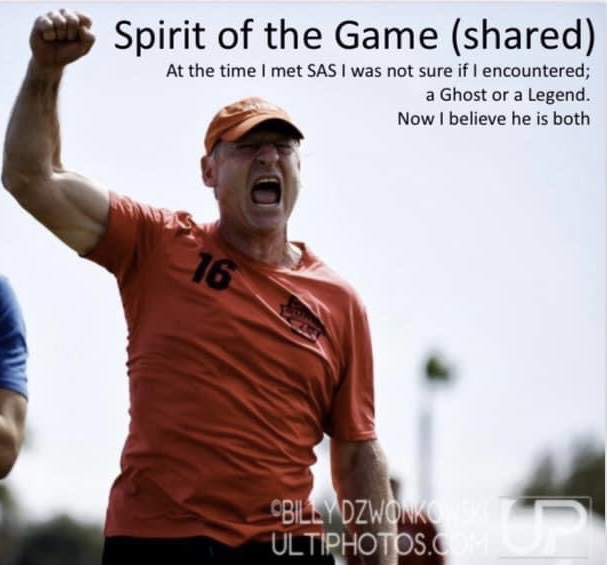
He spent half a day in the mineshaft platform, experiencing what he described as death. It is incredible when he recounts the story in detail—how he went through a bright light, met his deceased relatives, great-grandfathers, and even his beloved dogs and horses. Everyone welcomed him. He was losing so much blood, and it’s a true miracle that he survived. The rescue team finally got him out and took him to a hospital in England. He underwent 15 surgeries and spent much of his youth in a hospital bed. His doctors told him he would never walk again, that he would remain disabled for the rest of his life, or worse, suffer cognitive damage. But Alexander is a true fighter. He refused to accept this fate. He spent hours walking on crutches, determined to make his dream of walking again a reality. Against all odds, he not only walked again but also transformed his body into peak physical condition. He had played football as a child and, after his recovery, became a professional Ultimate Frisbee player, winning five world championships in the sport. It’s truly extraordinary.
Despite the physical and mental trauma, he persevered. After his accident, he had to relearn everything—school subjects, life skills—and he succeeded. He graduated high school and later attended Stanford University, where he earned his degree with honors. Through it all, he never lost his charm, his beauty, or his incredible spirit.
Alexander is a miracle—a man of intelligence, charisma, a big heart, and unparalleled determination. He never gives up, no matter how tough life gets. He always finds a way to win. That’s what I love most about him: he’s a fighter.