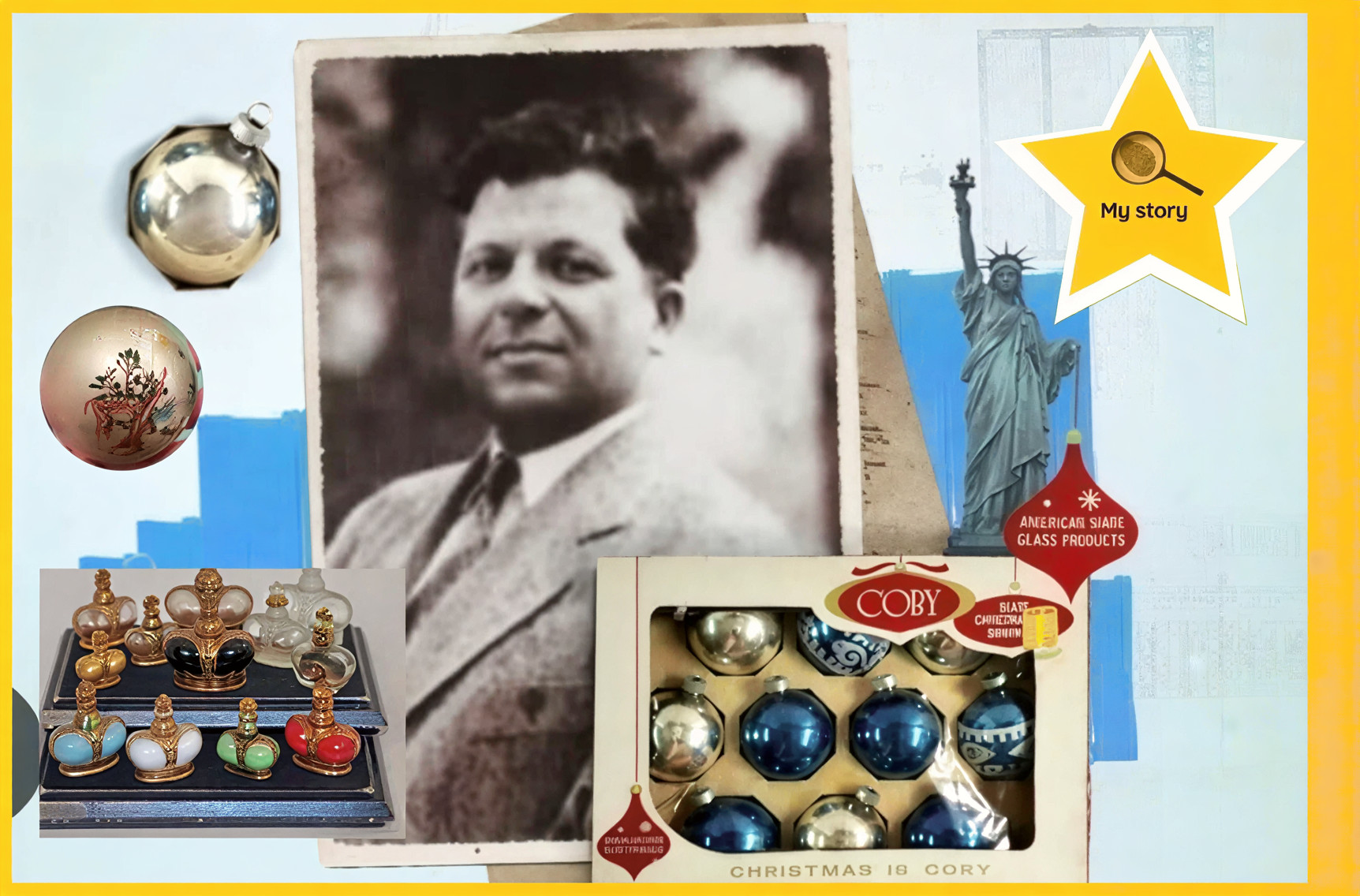
Among furnaces and molten sand, Coby discovered the craft that would shape his destiny. He learned how glass bends to heat, how machinery breathes, and how imagination becomes innovation.
In 1909, seeking opportunity, he and his wife set sail for America. Like so many immigrants, their first years were a fight for survival. Coby worked as a baker, then at General Electric, where his talent finally found space to grow. Soon, he earned patents for improved fountain pens, laboratory glass, and medical ampoules that prevented contamination — a significant breakthrough for hospitals.
By the early 1920s, he held over 60 patents, but his most influential creation was still ahead.
At that time, Christmas trees were lit with real candles — beautiful, but dangerously flammable. Fires were common; tragedy was never far. Coby envisioned something safer and brighter.
He invented the electric bubble lamp, a colorful glass tube filled with glowing liquid that shimmered like a candle flame. Paired with delicate, hand-colored glass ornaments, sold in burgundy boxes labeled COBY, his products quickly became a sensation.
Stores across America adopted the phrase:
✨ “Christmas is Coby.”
Coby’s lights were more than decoration. They brought electricity into American homes, normalized electric power in domestic life, and created the visual standards of modern holiday culture. In many ways, he didn’t just decorate Christmas — he transformed it.
His genius extended beyond the Christmas tree. In New York, he partnered with fellow Georgian émigré, Prince Giorgi Machabeli, founder of Prince Matchabelli perfumes.Coby’s factory produced glass bottles of exceptional clarity and design, including the iconic “Queen of Georgia” bottle that helped define the brand’s identity. Their collaboration symbolized something rare — two exiled Georgians shaping American taste through innovation and elegance.
Cobyalso changed American architecture. In Florida, he noticed that humidity destroyed traditional building materials. He responded with invention: moisture-resistant cement, improved brick formulas, and glass building blocks that reflected sunlight while protecting interiors. These innovations influenced early skyscraper construction, including techniques used in the Empire State Building. For his industrial contributions, Americans called him:
“The Georgian King.”
Despite his success,Coby never abandoned his roots. He sent financial support to his village and remained emotionally tied to Georgia until his final days. His journey is a reminder that identity travels with us, shaping the worlds we build.
Today, millions of families decorate their trees without knowing that a boy from the country of Georgia helped make it possible. Every glowing bulb, every shimmering ornament, every safe strand of lights carries a trace of his imagination.
George Coby’s story proves something simple and powerful:
Greatness doesn’t need permission.
Inspiration doesn’t need a homeland.
And innovation can begin anywhere — even in a forgotten mountain village.
He didn’t just illuminate Christmas. He illuminated history.